• MDC Formally Agrees To Join Mugabe - And The Real Reason Botswana Turned On Tsvangirai
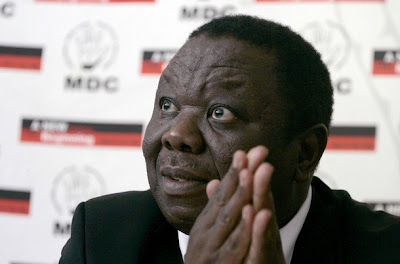
    Morgan Tsvangirai addresses a press conference a couple hours ago to announce that his party has agreed to join ZANU PF in government, a decision that takes the opposition into government on Mugabe's terms, not theirs.


    The latest news out of Zimbabwe is that the MDC of Morgan Tsvangirai has just announced formally that it will join Mugabe in a "coalition government". You will find the full text of Morgan Tsvangirai's Capitulation Statement at the end of this article.

    The opposition party is going into government with most of what it called its most important demands unfulfilled by Mugabe.

    The MDC and Morgan Tsvangirai, however, are putting on a brave front, claiming that they were" given concessions by SADC" that most of their demands will be met.

    As I mentioned previously, the really important demands which have not been addressed at all by Mugabe are:

    • The release of MDC activists abducted by Mugabe and subsequently charged with plotting to overthrow the ZANU PF government through force of arms. These banditry charges still stand and the acticists are still in custody, with Mugabe's judges refusing to release them on bail. The judges also refuse to iunvestigate the unlafu; abductions of the same activists, including Jestina Muukoko
    • The "equitable distribution of ministries" has not been addressed at all. The MDC goes into government on the basis of the same distribution of ministries that they said made them junior partners in the deal
    As is usual, the loud voices that we heard saying that Morgan must hold out until he was given what he wanted, that it was better to die than to accept this deal will now try to find a face-saving way to justify this utter capitulation by their party.

    And there is no doubt that it is a capitulation. To all intents and purposes and if we go by what MDC supporters have always been saying, then their party has surrendered to Mugabe. They go into a government that is loaded to the gills with Mugabe's cronies.

    The judiciary system, which is playing fast and loose with the law, endorsing abductions and torture in the interests of "state security" is still beholden to Mugabe. Their appointment are still made by Mugabe and Mugabe alone. He resisted throughout this impasse any suggestion that anybody, including Morgan Tsvangirai, had any say in the matter, saying the "consultation" stipulated in the agreement did not mean approval. He could appoint whom he wanted when he wanted.

    He demonstrated this by appointing Gono and Tomana at the Reserve Bank and in the Attorney General's office respectively.

    Because of bad negotiation skills or simply thick-headedness, the MDC signed a document that left Mugabe's patronage infrastructure in place. He will still be able to use it to keep judges, service chiefs and so on beholden to him and him alone.

    I say this because, as I have just mentioned and now repeat because it is so important, throughout the impasse, Mugabe maintained that he retained the right to appoint senior personel like Service Chiefs, Ambassadors, Permanent Secretaries and so on without the approval of anybody. He maintained the requirement to "consult" the Prime Minister did not give the First Minister veto power over Mugabe's appointments. SADC agreed with him. 

    And so, the MDC are going into government in a signal act of capitulation that endorses Mugabe's position on all these points.

    To fully understand what the MDC says are "concessions" from Mugabe, please read my article "Tsvangirai Finds A Face-saving Way To Join Government".

    But we must also understand just how it is that Botswana turned on Morgan Tsvangirai. The Tswanas issued a statement urging the MDC to join with Mugabe and work with him after the SADC summit.

    I now have the details of just how this came to be.

    SADC leaders apparently piled on Botswana, accusing it of sabotaging the efforts the region was making to end the Zimbabwe impasse. King Mswati and President Motlanthe of South Africa apparently directly challenged the Botswana president in the meeting, telling him that his behaviour gave ammunition to Mugabe's claim that he was training MDC bandits.

    They claimed that his departure from SADC resolutions on Zimbabwe played into the hands of Mugabe, who asked the regional body to investigate Botswana for training insurgents on behalf of the MDC.

    "If you are for peace in our region, you will stand with SADC." King Mswati is reported to have told President Khama. 

    It appears this pressure, which was backed openly during the meeting by all the other SADC states present without exception, led to Botswana also giving in. The Tswana volunatrily went further and said they would demonstrate their good faith by issuing a public statement backing the regional bodys resolutions and approach to the Zimbabwe crisis.

    Regular readers, you willnow be treated to a comedy of epic proportions as those who were saying all over the internet: "We would rather die than join Mugabe until our demands" now backpedal and try to justify this capitulation.

    Keep in mind, whatever spin they put on it, they have now joined on Mugabe's terms, not the MDCs. Evidence is provided in the form of their activists still in jail, a shared Home Affairs Ministry and Mugabe's gazetted list of allocation of ministries.

    STATEMENT BY MORGAN TSVANGIRAI ISSUED TODAY, ANNOUNCING THE MDC DECISION TO JOIN ZANU PF IN GOVERNMENT

    Today, the MDC’s National Council met as we once again find ourselves at an historic crossroads in our decade-long struggle for democracy. Throughout this struggle, the MDC has been guided by the principles of democracy and by the will of the people. This campaign is neither easy nor straightforward and often we have had to change the fronts on which we wage the struggle in response to changing circumstances and conditions.

    The MDC was established to bring about change through the ballot box. This we achieved despite overwhelming odds, culminating in our historic victories in the March 29th Parliamentary, Presidential and local government elections.

    Then, the brutal campaign of violence unleashed against our supporters by Zanu PF, forced us to withdraw from the June 27th event. Thus it became obvious that we could no longer wage our struggle via the polling booth.

    We looked to the region to support our position and the will of the people by acknowledging the results of March 29th as the basis on which a new government should be formed. Subsequently, we succeeded in forcing Zanu PF to the negotiating table which became the new frontline in our quest for a democratic Zimbabwe. It was for this reason that we signed the Global Political Agreement on September 15th, 2008.

    I know that you are very familiar with the events from that date. We in the MDC have abided by the letter and spirit of both the Memorandum of Understanding and the GPA. Sadly, Zanu PF was not the type of constructive and positive partner that we envisaged when we signed the GPA and therefore, the consummation of the agreement has been subject to unnecessary delays.

    Nonetheless, we have consistently tabled our outstanding issues to SADC and we have remained committed to finding a negotiated settlement to the political crisis in Zimbabwe. This process culminated in the SADC summit on Monday 26th January, where the Southern African leaders made the following resolutions:

    I. The parties shall endeavour to cause Parliament to pass the Constitutional Amendment 19 by 5 February 2009.
    II. The Prime Minister and the Deputy Prime Ministers shall be sworn in by 11 February 2009:
    III. The Ministers and Deputy Ministers shall be sworn in on 13 February 2009, which will conclude the process of the formation of the inclusive government.
    IV. The Joint-Monitoring and Implementation Committee (JOMIC), provided for in the Global Political Agreement, shall be activated immediately. The first meeting of JOMIC shall be convened by the facilitator on 30 January 2009 and shall, among other things, elect the chairpersons;
    V. The allocation of ministerial portfolios endorsed by the SADC Extraordinary Summit held on 9 November 2008 shall be reviewed six (6) months after the inauguration of the inclusive government.
    VI. The appointments of the Reserve Bank Governor and the Attorney General will be dealt with by the inclusive government after its formation
    VII. The negotiators of the parties shall meet immediately to consider the National Security Bill submitted by the MDC-T as well as the formula for the distribution of governors: While we felt that these resolutions do not represent an acknowledgement of all our issues, they do represent significant concessions on the part of Zanu PF and a recognition by SADC that our demands are justified as a first step towards a sustainable solution to the Zimbabwe crisis.

    Our National Council’s meeting today was therefore convened to evaluate the party’s position in relation to the inclusive government. The concessions made by Zanu PF incorporate four out of the five outstanding issues. These four issues are the allocation of Provincial Governors, the National Security Legislation, Constitutional Amendment 19 and the breaches to the Global Political Agreement.

    Thus, the parties have agreed on the sharing of Provincial Governors portfolios and have already met to begin negotiations on the allocation formula. Similarly, with regard to the National Security Legislation, the negotiators have met to discuss the draft bill submitted by the MDC.

    It is clear therefore that these two issues are subject to negotiation and therefore constitute work in progress. It is hoped that the work in progress will be concluded to the satisfaction of all the parties as soon as possible.

    The third issue relates to Constitutional Amendment 19. The MDC has insisted that Constitutional Amendment 19 is enacted by parliament and signed into law prior to the swearing in of the Prime Minister and this has been agreed to by the parties as reflected in the SADC communiqué.

    On the issue of the equitable allocation of ministerial portfolios, SADC reiterated its position from November 9th, 2008 and expanded its commitment to review the allocation of all ministries, not only Home Affairs, within six months of an inclusive government being formed.

    On the breaches to the GPA and the MOU, SADC resolved that the Joint-Monitoring Implementation Committee (JOMIC), is established to review and reverse these breaches. This committee comprises four members from MDC-T, four members from MDC-M and four members from Zanu PF.

    However, the MDC is concerned that the issue of the unwarranted and illegal abductions and detentions of MDC members and other democratic activists needs to be addressed as a matter of urgency and to this effect, the MDC will ensure an end to the persecution of all Zimbabweans.

    In light of these resolutions, todays’s debate centred around two issues:

    Firstly, what will allow us the best opportunity to continue to pursue our goal of achieving a free, democratic Zimbabwe in line with the roadmap from our Congress of March 2006? and;

    Secondly, what is the best way of alleviating the suffering of the Zimbabwean people, stabilising the economy and restoring and retaining some semblance of a normal society?

    Let us make no mistake, by joining an inclusive government, we are not saying that this is a solution to the Zimbabwe crisis, instead our participation signifies that we have chosen to continue the struggle for a democratic Zimbabwe in a new arena. This agreement is a significant milestone on our journey to democracy but it does not signify that we have arrived at our destination – we are committed to establishing a democratic Zimbabwe regardless of how long that struggle takes us.

    We have the majority in parliament, we control all the main urban councils and many rural councils, we will have control of 13 ministries and a presence in the key decision-making bodies of the executive.

    Throughout the course of our deliberations today we referred to, and were guided by, the road map that we established for ourselves in March 2006, namely - negotiations, a transitional authority, a people driven constitution and fresh, free and fair elections.

    In this respect, the National Council resolved that through joining an inclusive government in line with the GPA and the SADC resolutions the party will be able to achieve the following: • To move towards a new, democratic Zimbabwe by ensuring that a people-driven constitution is crafted and adopted.

    • That this inclusive government will serve as a transitional authority leading to free and fair elections.
    • The restoration of the people’s freedoms through creating democratic space, restoring the rule of law and basic human rights.
    • The stabilisation and rebuilding of the economy and the provision of all essential services, in particular health care and education.
    • To maintain the principles of the working people’s convention established in 1999.
    • To ensure that we begin a process of national healing and integration.

    Therefore, in accordance with the party’s constitution, the political agreement we signed on September 15th 2008, and in the best interests of the welfare of all Zimbabweans the MDC has resolved to form an inclusive government with Zanu PF and MDC-M.

    The success of this inclusive government is dependent on many factors including the goodwill of the parties involved, the support of the people of Zimbabwe and the continued engagement and vigilance of SADC, AU and the broader international community in ensurinhg that all parties are bound by the letter and spirit of the GPA and the commitments made at the last SADC summit. In this respect, the party shall continue to monitor the implementation of the agreement, in particular in shall assess and review its position in the inclusive government after 6 months in line with the SADC resolutions.

    Now is the time for us to put aside our political differences , to prioritise the welfare of the people in both our policies and our actions and to focus on stabilisation, development, progress and democratization. In this I know that we have the support of the vast majority of Zimbabweans, both in Zanu PF and the MDC, in the civil service,the workers and the business community and we look forward to working with you to rebuild our great nation.

    In conclusion, I would like to note that in this struggle we have not been alone. I wish to acknowledge the commitment and perseverance of SADC to finding a negotiated solution to the political crisis. In particular, we have had the unwavering support of our regional allies who have stood by us and our democratic ideals throughout this process and we are grateful for their solidarity.

    We would like to acknowledge the support and solidarity that we have had from trade unions, civil society and democratic peoples’ and governments all over the world. We appreciate this support and know that we could not have come this far without them.

    Most importantly of all, we have had the support of the people. A people who have stood by their right to live in freedom, with access to jobs, health care, education and prosperity in such a principled and peaceful manner.

    I would like to appeal to all these forces to continue to support us in whatever decision we take because the struggle is not over, our commitment is not lessened, our vision is not dulled and our resolve has not been weakened.

    We will deliver a New Zimbabwe to the people.

    The struggle continues.

    I thank you


    Previous Articles (Please Click On One To Read The Full Post):


    more
  • Right Again! Complete Official Dollarisation Announced In Budget
    So?

    Well, the budget story is not a story to you regular readers, I broke this story on January 20 this year in an article entitled As Talks Collapse, Dollarisation Now Official. I did tell you that there would be a few shocks in the budget didn't I? And on 12 January, I broke the story that the Zimbabwe Stock Exchange was to be dollarised! This has also been confirmed by the "Acting Finance Minister" in the budget. 

    A lot of people insisted I was "speculating", did not know what I was talking about and so on. But I happen to have been right with every single story on this blog so far. I will let you, the readers, be the judge!

    For you, my readers, I suppose it is pointless for me to repeat "news" that you read about 10 days ago on this blog.

    What you should take careful note of however, is something that the general public who do not read this blog are not aware of yet, this being the story I also broke here on New Year's Day, I January, entitled: Zimbabwe Approaches South Africa To Officially Use The Rand.

    Pay special attention to Chinamasa's budget speech and you will see that he says no expenditure outside of the budget is going to be entertained. In other words, all ministries will have to live within whatever allocations they have been given.

    This is important because, as I told you in "Zimbabwe Approaches South Africa To Officially Use The Rand", the South Africans demanded this. They made it clear that one of the conditions for Zimbabwe's official adoption of the Rand would be that they come up with measures to ensure that the Mugabe government never aproached the South African Reserve Bank to "borrow" money for its operations.

    Mboweni, in his meeting with Gono late last year, is said to have made it clear that South Africa did not have the capacity nor inclination to support ad hoc expenditure like the Zimbabwe Reserve Bank did, simply dishing out money whenever government overspent.

    The fact that Chinamasa has explicitly made this committment is an effort to show the South Africans that Zimbabwe is ready to meet the conditions set for use of the South African Rand. 

    So, we are definitely on course for the official adoption of the South African currency. We will be joining the Rand Customs Union, which currently comprises of Lesotho, Namibia and Swaziland. How long the South Africans will wait to see if, in practical terms, Zimbabwe's ministries will stick to the principle of living within their means, is not yet known.

    But we can be sure that they will want evidence that the Zim government is capable of actually doing this before official announcement is made. Randisation is definitely coming. It is just a matter of time, to wait and see how serious Mugabe's government is.

    Let me also state unequivocally that, as a result of this dollarised budget, MORGAN TSVANGIRAI AND THE MDC MUST DUMP THIS UNITY GOVERNMENT THING FORTHWITH!! 

    Let me explain. This budget is a classic ZANU PF budget. Take this, for instance: The budget is worth US$1.9billion  in total.  Yet, of this, fully US$1.7billion of it is recurring expenditure. In other words, out of the total National Budget of US$1.9billion, US$1.7billion is for purely consumptive purposes! They intend to "eat" this money. There is no provision for development or resuscitation of the economy and country's infrastructure here. This is what is called a wasteful budget. It is not looking to the long-term.

    As a result, should Morgan and his buddies join this monster, they will be tied to a failure. The budget is one that ignores the massive need for redevelopment in Zimbabwe. It will not end the suffering of the people of Zimbabwe at all. Instead, the suffering will be made worse.

    By concentrating on "eating the money" (this is a very Zimbabwean expression by the way - "kudya mari"), the Mugabe government appears to have abandoned all hope of developing this country.

    This budget will not create any jobs, that is for sure. Of course, as I told you a week or so ago, Mugabe and his party have abandoned the productive sector, whom they accuse of "sabotage". They were not going to do anything to revive production with this budget as a result.

    But this is where jobs would have come from. Still, Mugabe, who was fulminating during a cabinet meeting in December that, "If we have to become a nation of shopkeepers like the British, so be it, I am sick and tired of our productive industry!", was not going to make provision for local industry to recover.

    To reinforce this and for you to really understand the truth of this stance, you only have to look at the fact that the suspension of duty for the importation of basic goods has been suspended again until June this year. 

    Mugabe wants people and supermarkets to be able to import maize-meal, cooking oil, sugar, salt et al, from South Africa, Mozambique and Botswana at a minimal cost.

    Zimbabweans are already spending billions of rands shopping in South Africa every year. And, if the South Africans are really clever, they could, at a stroke, shrug off the looming global recession as they crank up their production to cater for the demand from Zimbabwe. This demand will now be increased exponetially because of the officiallisation of the use of the US dollar and Rand and the suspension of import duties on basic goods.

    What Mboweni had demanded was for Zimbabwe to put in place the same import and export regime that exists in the Rand Customs Union BEFORE they join it. This budget goes some way towards achieving this.

    Below, then, are what can be considered the highlights of the Zimbabwe National Budget. You will notice that quite a few of the things in it are things that I broke in stories on this blog long before the budget presentation

    • Use of multiple Foreign Currencies Now Official
    • Customs duty suspension on basic commodities extended to June (bugger Zimbabwean manufacturers, says Mugabe, and he says he is never going back on this, "they will have to compete on the open market with South African and Mozambican goods," he told cabinet in December)
    • Voucher system for civil servants' foreign currency allowances (these are essentially salaries paid in foreign currency and the "vouchers" will be denominated in US dollars. Special shops will be set up from where civil servants can buy goods and services using these vouchers. The shops and outles will then redeem the vouchers for real US dollars at the Reserve Bank)
    • Zimbabwe Stock Exchange To Trade In Foreign Currency (this story I broke on 12 January 2009, abou two weeks ago)
    • Water management goes back into the hands of the local councils (MDC controls most local councils and here Mugabe is trying to set up the opposition for failure, by giving them a posioned chalice and NO MONEY to rescuscitate the infrastructure killed by ZINWA, the Zimbabwe National Water Authority).
    • GMB monopoly on buying maize and other grains has been abandoned (a commendable move, especially in tandem with the abolition of import duties in basic goods - the millers can buy their maize directly, turn it into maize mill and sell it for exhorbitant amounts of money like they are used to, but now Zimbabweans will simply refuse to buy local, which is traditionally more expensive and instead go for cheaper (and better quality) South African mealie-meal etc.
    • ALL TAXES TO BE PAID IN FOREIGN CURRENCY (That means ALL TAXES, including traffic fines - the corrupt ZRP Traffic department must be rejoicing. A lot of motorists will be parting with US dollars on the roads of our country!)
    • Anyone can now charge in foreign currency, not only those who were licenced by the Reserve Bank to do so (This, more than anything else, reveals the fact that the country is now officially dollarised. No shop is going to accept Zimbabwe dollars again after this.)
    Previous Articles (Please Click On One To Read The Full Post):


    more
  • Zimbabwe: Tsvangirai Finds A Face-saving Way To Agree To Join Government
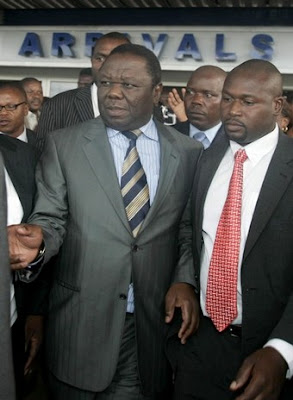
    Morgan Tsvangirai arrives at Harare International Airport on Wednesday, 28 January 2009, soon after he had told South African media that he had indeed agreed to join what he now calls the "coalition government."

    The latest Zimbabwe news is all about the SADC Extraordinary Summit held on Monday in Tshwane, South Africa. 

    Morgan Tsvangirai has finally spoken on whether he agreed to join government or not. He says he has agreed, telling South African Media yesterday that he "wanted to acknowledge" "concessions" made by Mugabe during the just-ended Extraordinary Summit.

    Closer examination of the facts reveal that it is in fact Tsvangirai who is now  simply trying to find a face-saving way to give in to the immense pressure he has been under since the agreement was signed. 

    He has effectively dropped two of the most important demands he was making:

    • the release of his activists from prison before a government is formed
    • the "equitable distribution of ministries"

    First of all, Tsvangirai says in an interview with Basildon Peta that he "wanted to acknowledge" the "concessions made by ZANU PF on THREE of the FIVE MDC concerns."

    Tsvangirai says Mugabe gave ground on three of the MDC demands, these being:

    • The appointments of Governors
    • The National Security Council Bill drafted by the MDC
    • Passage of Constitutional Ammendment Number 19
    The truth of the matter, when we really look at it, is that the only issue on which we can say Mugabe gave ground is on the appointment of Governors, which will be discussed by the negotiators starting today in Harare, without the SADC mediator present.

    Search back and you will find that Mugabe never objected to the Draft National Security Bill from MDC, which was presented AFTER the agreement had been signed. He considered it a new element being introduced by the MDC and was refusing to let it delay the formation of government. He has now agreed to discuss the Bill BEFORE the government is formed, hoping agreement will be reached on it before SADC's 11 February deadline for the swearing-in of Tsvangirai. Agreement on the Bill is almost guaranteed, because Mugabe never objected to its content.

    On the third point, the enactment of Constitutional Ammendment Number 19, Mugabe has made no concessions at all, despite what Tsvangirai told the South African media. Instead, it is Tsvangirai who has now recognised the gazetting of the Act by Mugabe, something he was against and which, at the time it was done, he said was a breach of the agreement by Mugabe

    Tsvangirai now simply agrees to pass the Ammendment in parliament as Mugabe was demanding. He has made no demands for the Act to be re-gazetted, which means that it will follow the schedule set by Mugabe when he gazetted it. And there are no demands from the MDC for the Act to be revised in any way. In fact, it is not up for discussion at the negotiations starting Thursday (today) in Harare.

    This statement by Tsvangirai is simply a face-saver, a way in which he seeks to find grounds for justifying what is essentially a capitulation by him.

    WHAT THEN IS THE BOTTOM LINE? It is this: Morgan Tsvangirai has recognised that going to the African Union is futile, as I have been saying October last year. He has also recognised that there is no chance of success at the United Nations as I have been saying since October last year.

    Finally, and just as I said last year at the start of this impasse after the agreement was signed, he has come back to the table to accept the deal, with what can generously be described as "minor tweaks to it."

    Crucially, we must all note that, all of a sudden, the other demands of the MDC appear to have now been dropped by Tsvangirai. THESE ARE: 

    • the release of the MDC activists currently held in prison on charges of banditry - Mugabe on this even refused outright to commit to the "stoppage of the abudctions" let alone the release of those already in custody.
    • equitable allocation of ministries - the MDC will indeed share Home Affairs with Mugabe and have the arrangement looked at in six months' time by SADC. The current allocation of ministerial posts remains in place and is what will be implemented as Tsvangirai goes into government.
    To make matters even clearer on whether he has agreed to join the Inclusive Government, Tsvangirai said yesterday: "After all, the whole idea of these negotiations is to form a coalition government and I therefore agreed to that principle."

    Tsvangirai may have found a face-saving way to climb down by shifting focus to the less contentious issues of the Security Bill, which he says ZANU PF "will input" in today's (Thursday's) negotiations, appointment of governors and the already agreed to enactment of Ammendment Number 19, BUT THIS IS STILL A CLIMBDOWN in that

    • His supporters remain in jail with no committment by Mugabe to release them.
    • The Ministry of Home Affairs remains as a shared ministry and the allocation of ministries drafted by Mugabe will now be implemented without ammendment.
    If this is not a climb-down, then I don't know what is.

    Meantime, The Botswana government issued a statement through its foreign minister yesterday endorsing the SADC position that a government be formed by February 11 and urging Mugabe and Tsvangirai to "trust each other". The Bostwana foreign minister said, "We believe it will work this time around because there is a time-frame. What is important is for both parties to trust each other. The two parties should sit down and resolve their differences."

    Previous Articles (Please Click On One To Read The Full Post):


    more

Search The Entire Web

Entrecard Blog Of The Day

BECOME A MEMBER, JOIN HERE

FOLLOW THIS BLOG ON FACEBOOK

Blog Archive

Harare Weather

My Favorites